· 7 min read
Can Dogs Eat Green Onions? The Surprising Truth Every Pet Parent Should Know
You’re dicing fresh green onions for a stir-fry, the sharp, zesty aroma filling the kitchen. Suddenly, your dog appears at your feet, tail thumping, eyes locked on the bright green pieces. “Just a tiny nibble?” you think. They love veggies—carrots, cucumbers, even the occasional spinach leaf. Green onions are packed with vitamins, after all. What’s the harm in sharing?
If you’ve ever asked yourself this question, you’re not alone. Green onions (also called scallions) are a staple in many kitchens, prized for their mild flavor and nutritional punch. But when it comes to our furry friends, not all human foods are safe—even the “healthy” ones.
In this post, we’ll dive into whether green onions are safe for dogs, break down the risks (spoiler: they’re significant), and share safer alternatives to keep your pup happy and healthy. Let’s get started.
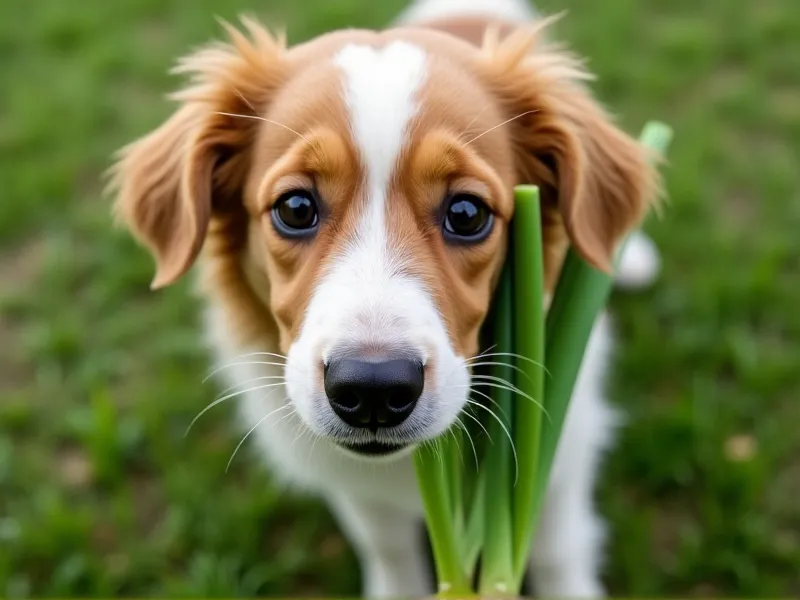
Table of Contents
- Can Dogs Eat Green Onions? The Short Answer
- The Risks of Green Onions for Dogs: Why They’re Toxic
- Thiosulfate: The Hidden Danger
- Symptoms of Green Onion Toxicity
- Who’s Most at Risk?
- Are There Any Benefits to Feeding Green Onions to Dogs?
- How Much Green Onion is “Safe” for Dogs?
- Healthier Alternatives to Green Onions
- FAQ: Common Questions About Dogs and Green Onions
- Conclusion: Prioritize Your Pup’s Safety
- References
Can Dogs Eat Green Onions? The Short Answer
No, dogs should not eat green onions.
Green onions belong to the Allium family, which includes onions, garlic, chives, and leeks. All Allium plants contain compounds that are toxic to dogs, even in small amounts. While green onions are milder than, say, garlic or red onions, they still pose a serious risk to your dog’s health.
The ASPCA (American Society for the Prevention of Cruelty to Animals) explicitly lists green onions as toxic to dogs, noting that ingestion can lead to life-threatening conditions like hemolytic anemia—a breakdown of red blood cells that impairs oxygen transport in the body.
So, while your dog might beg for a bite, it’s best to keep green onions (and all Allium veggies) far from their food bowl.
The Risks of Green Onions for Dogs: Why They’re Toxic
To understand why green onions are dangerous, let’s break down the science—without the jargon.
Thiosulfate: The Hidden Danger
Green onions contain organosulfur compounds, specifically thiosulfate, which is harmless to humans but toxic to dogs. Here’s why: Dogs lack the enzyme needed to properly break down thiosulfate. When they ingest it, the compound damages hemoglobin—the protein in red blood cells that carries oxygen. Damaged red blood cells then rupture (a process called “hemolysis”), leading to a condition called hemolytic anemia.
Anemia means your dog’s body can’t transport enough oxygen to its organs and tissues. Left untreated, this can cause organ failure, coma, or even death.
Symptoms of Green Onion Toxicity
Toxicity symptoms can appear within a few hours to a few days after ingestion, depending on how much your dog ate. Watch for these red flags:
- Gastrointestinal upset: Vomiting, diarrhea, or loss of appetite (the first signs in many cases).
- Lethargy or weakness: Your dog may seem tired, unsteady, or unwilling to play.
- Pale gums or tongue: A key sign of anemia (healthy gums should be bright pink).
- Increased heart rate or breathing: Your dog may pant heavily or have a rapid pulse as their body struggles to get oxygen.
- Dark urine: Damaged red blood cells are filtered out by the kidneys, turning urine a dark, tea-like color.
If you notice any of these symptoms—and suspect your dog ate green onions—contact your vet immediately. Time is critical: early treatment (like inducing vomiting or administering activated charcoal) can prevent severe anemia.
Who’s Most at Risk?
All dogs are vulnerable, but some are more at risk than others:
- Small breeds: A tiny amount (e.g., a few inches of green onion) can be toxic to a Chihuahua or Yorkie, while a larger dog might need to eat more to show symptoms.
- Puppies: Their smaller bodies and developing systems process toxins less efficiently.
- Dogs with pre-existing conditions: Kidney or liver disease, or anemia, can worsen the effects of thiosulfate.
Are There Any Benefits to Feeding Green Onions to Dogs?
Green onions are nutrient-dense for humans: they’re rich in vitamin K (supports blood clotting), vitamin C (antioxidant), fiber (aids digestion), and potassium (regulates blood pressure). But here’s the catch: these benefits are not worth the risk of toxicity for dogs.
Dogs can get all these nutrients from safe, dog-friendly foods (more on that later). For example, vitamin K is abundant in spinach (in small, cooked amounts), vitamin C in bell peppers, and fiber in carrots. There’s no need to gamble with your dog’s health for a nutrient they can get elsewhere—safely.
How Much Green Onion is “Safe” for Dogs?
The short answer: There’s no “safe” amount.
Even a small piece can cause problems, especially for small dogs. The ASPCA notes that toxicity can occur with as little as 5 grams of onion per kilogram of body weight (for context, a 10-pound dog weighs ~4.5 kg, so just 22 grams—about ¼ cup of chopped green onions—could be dangerous).
Some pet parents argue, “My dog stole a tiny piece once and was fine!” While mild cases may resolve without issue, repeated small exposures can lead to chronic toxicity. Thiosulfate builds up in the body over time, increasing the risk of anemia even if no single ingestion seems “bad enough.”
When it comes to green onions, “moderation” isn’t the goal—it’s avoidance.
Healthier Alternatives to Green Onions
If your dog loves veggies, skip the green onions and opt for these safe, nutrient-packed alternatives instead:
1. Carrots
Crunchy, low-calorie, and full of vitamin A (great for eye health). Serve raw (as a chew toy!) or steamed for a softer treat.
2. Green Beans
High in fiber and vitamins C and K, with no toxic risks. Fresh or frozen (thawed) green beans make a tasty, low-fat snack.
3. Cucumber
Hydrating and low in calories—perfect for hot days! Remove the seeds (they can cause gas) and slice into bite-sized pieces.
4. Bell Peppers
Red, yellow, or green: all are safe and loaded with vitamin C. Chop into strips for a crunchy snack.
5. Cooked Sweet Potato
Rich in fiber, beta-carotene, and potassium. Mash a small amount into their regular food for a nutrient boost (avoid adding butter or salt).
FAQ: Common Questions About Dogs and Green Onions
Q: “My dog ate a small piece of green onion—should I panic?”
A: Don’t panic, but don’t ignore it either. Call your vet and share details: your dog’s size, how much they ate, and when. Your vet may recommend monitoring for symptoms or bringing them in for an exam. Even “small” amounts can be risky for tiny dogs!
Q: “Are cooked green onions safer than raw ones?”
A: No. Cooking breaks down some compounds, but thiosulfate remains toxic. Boiling, sautéing, or roasting won’t make green onions safe for dogs.
Q: “What’s the difference between green onions and chives? Are chives safer?”
A: Chives are also in the Allium family and just as toxic (if not more so). They contain higher levels of thiosulfate than green onions, so even a small nibble is dangerous.
Q: “Can puppies eat green onions?”
A: Puppies are more vulnerable to toxins, so green onions are a hard “no.” Stick to puppy-safe treats like plain, cooked chicken or small pieces of apple (no seeds!).
Q: “My dog ate a dish that had green onions cooked in—like a stir-fry. Is that a problem?”
A: Yes. Even a small amount of green onion in a sauce or dish can be toxic, especially for small dogs. If the dish had more than a sprinkle, contact your vet.
Conclusion: Prioritize Your Pup’s Safety
At the end of the day, green onions are a human food best kept off your dog’s plate. While they’re nutritious for us, their toxicity risk to dogs is too high to ignore. Hemolytic anemia is preventable—and the easiest way to prevent it is to avoid feeding green onions (or any Allium veggies) to your dog.
If your dog accidentally ingests green onions, stay calm and call your vet immediately. And for everyday treats, stick to the safe alternatives we listed—your dog will love them just as much, and you’ll have peace of mind knowing they’re healthy.
Remember: When in doubt about a food, always check with your vet. They know your dog’s unique needs and can guide you toward the best choices for their health.
References
- American Society for the Prevention of Cruelty to Animals (ASPCA). “Onions.” aspca.org/pet-care/animal-poison-control/toxic-and-non-toxic-plants/onions.
- American Kennel Club (AKC). “Can Dogs Eat Onions?” akc.org/expert-advice/nutrition/can-dogs-eat-onions/.
- Pet Poison Helpline. “Onion Toxicity in Dogs and Cats.” petpoisonhelpline.com/poison/onion/.
- VCA Animal Hospitals. “Onion Poisoning in Dogs.” vcahospitals.com/know-your-pet/onion-poisoning-in-dogs.