· 10 min read
Can Dogs Eat Chives? The Surprising Truth Every Pet Parent Needs to Know
It’s a lazy Saturday afternoon, and you’re chopping fresh herbs for your homemade soup. Your golden retriever, Lucy, plops down at your feet, tail thumping against the cabinets, her big brown eyes fixed on the vibrant green chives in your hand. “Just a tiny sprinkle won’t hurt, right?” you think. After all, chives are fresh, fragrant, and seem like a harmless addition to her diet. But before you toss her a taste, let’s get to the bottom of a question pet parents everywhere ask: Can dogs eat chives?
As pet owners, we want to share the best parts of life with our furry friends—including (let’s admit it) the occasional snack. But not all human foods are created equal for dogs, and herbs like chives fall into a gray area that’s worth exploring. In this post, we’ll break down the risks, the (limited) benefits, and what to do if your dog sneaks a bite. By the end, you’ll have all the info you need to keep your pup happy, healthy, and chive-free.
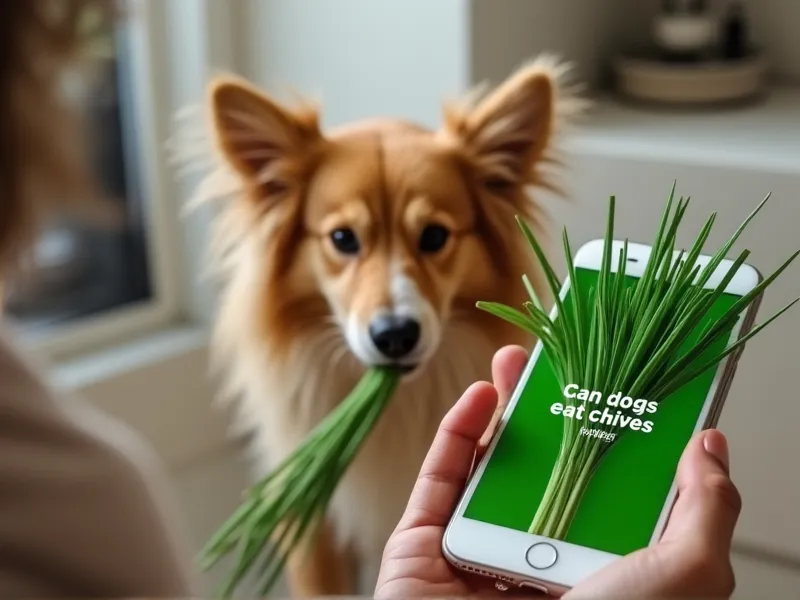
Table of Contents
- What Are Chives, Anyway?
- Can Dogs Eat Chives? The Short Answer
- The Risks of Chives for Dogs: Why Allium Toxicity Matters
- Potential Benefits of Chives (Spoiler: They’re Not Worth the Risk)
- My Dog Ate Chives! What Should I Do?
- Safe Alternatives to Chives for Dogs
- FAQ: Your Chive Questions, Answered
- Conclusion: Prioritizing Your Dog’s Safety
1. What Are Chives, Anyway?
Before we dive into whether dogs can eat chives, let’s make sure we’re all on the same page about what chives are. Chives (Allium schoenoprasum) are a member of the Allium family, a group of flowering plants that also includes onions, garlic, leeks, shallots, and scallions. Native to Europe, Asia, and North America, chives are beloved in kitchens worldwide for their mild, onion-like flavor and bright green color.
These slender, hollow herbs grow in clumps, with long, grass-like leaves that are typically chopped fresh and used as a garnish or flavor booster in dishes like soups, salads, omelets, and baked potatoes. They’re also easy to grow at home—many gardeners keep them in pots on windowsills for quick access.
But here’s the catch: While humans enjoy chives for their taste and (mild) nutritional perks, the Allium family is not a friend to our furry companions. To understand why, we need to talk about what makes these plants potentially dangerous for dogs.
2. Can Dogs Eat Chives? The Short Answer
Let’s cut to the chase: No, dogs should not eat chives.
Even small amounts of chives can be toxic to dogs, thanks to compounds found in Allium plants that damage their red blood cells. While chives are less concentrated in these toxins than, say, garlic or onions, they’re still risky. The ASPCA (American Society for the Prevention of Cruelty to Animals) explicitly lists chives as toxic to dogs, cats, and horses, noting that ingestion can lead to serious health issues, including anemia.
In short: That sprinkle of chives on your potato salad or the stray leaf that fell on the floor? Keep it away from your pup.
3. The Risks of Chives for Dogs: Why Allium Toxicity Matters
To understand why chives are dangerous, we need to talk about Allium toxicity. All Allium plants—including chives—contain sulfur compounds called N-propyl disulfide and thiosulphate. These compounds are harmless to humans (in fact, they’re what give onions and garlic their pungent flavor), but they’re toxic to dogs.
Here’s why: When dogs ingest these compounds, their bodies can’t break them down effectively. Instead, the compounds attach to red blood cells, causing them to rupture. This process is called oxidative damage, and it leads to a condition known as hemolytic anemia.
What Is Hemolytic Anemia?
Red blood cells are responsible for carrying oxygen from the lungs to every cell in the body. When they’re damaged or destroyed, the body can’t get the oxygen it needs. This leads to anemia (low red blood cell count), which can be life-threatening if left untreated.
Think of it like a fleet of delivery trucks (red blood cells) carrying oxygen (packages) to your dog’s organs. If the trucks start breaking down mid-route, the organs (like the heart, brain, and kidneys) don’t get the supplies they need to function. Over time, this can cause organ failure.
Symptoms to Watch For
If your dog eats chives, symptoms of Allium toxicity may not appear right away. In fact, they can take 24–72 hours to show up, which is why it’s critical to act fast if you suspect ingestion. Common symptoms include:
- Gastrointestinal upset: Vomiting (may be frothy or contain bile), diarrhea (possibly bloody), or loss of appetite.
- Lethargy: Your dog may seem tired, weak, or uninterested in play.
- Pale gums: Press gently on your dog’s gums—they should turn white briefly, then pink again within 2 seconds. If they stay pale, this could signal anemia.
- Rapid breathing or heart rate: The body tries to compensate for low oxygen by breathing faster or pumping blood harder.
- Collapse or weakness: In severe cases, dogs may struggle to stand or faint.
If you notice any of these signs—especially if you know your dog ate chives—contact your vet immediately.
How Much Chives Are Toxic to Dogs?
Toxicity depends on a few factors: your dog’s size, weight, and overall health, as well as the amount of chives eaten. Small dogs (like Chihuahuas or Yorkies) are more vulnerable to small doses, while larger dogs (like Great Danes) may tolerate slightly more—but no amount is truly “safe.”
According to the Pet Poison Helpline, toxicity can occur with as little as 1–2 grams of Allium plants per kilogram of body weight. For context:
- A 5-pound (2.3kg) Chihuahua could be affected by just 2–4 grams of chives (about 1–2 teaspoons).
- A 50-pound (22.7kg) Labrador might show symptoms after eating 22–45 grams (about 4–9 teaspoons).
Even a “small” amount—like the chives on a slice of pizza or a few leaves from the garden—could put a small dog at risk. And remember: Cooking chives (or any Allium plant) doesn’t reduce their toxicity. The compounds remain harmful whether raw, cooked, dried, or powdered.
4. Potential Benefits of Chives (Spoiler: They’re Not Worth the Risk)
At this point, you might be thinking: “But chives are healthy for humans—don’t they have vitamins or fiber?” It’s true: Chives contain small amounts of nutrients like vitamin K (supports blood clotting), vitamin C (antioxidant), potassium (regulates blood pressure), and fiber (aids digestion). But here’s the problem:
Dogs don’t need chives to get these nutrients.
Your dog’s commercial dog food is formulated to provide all the vitamins, minerals, and fiber they need. Adding chives won’t “boost” their health—and the risk of toxicity far outweighs any minor nutritional perks.
Think of it this way: Would you give your dog a tiny piece of chocolate because it has antioxidants? Probably not—because the risk of poisoning is too high. Chives fall into the same category: the potential harm is just not worth the negligible benefits.
5. My Dog Ate Chives! What Should I Do?
If your dog sneaks a bite of chives, here’s what to do:
Step 1: Stay calm.
Panicking won’t help your dog—focus on acting quickly.
Step 2: Gather information.
Note:
- How much chives your dog ate (if you know).
- When they ate them (time of ingestion).
- Any symptoms they’re showing (vomiting, lethargy, etc.).
Step 3: Contact your vet or an emergency animal hospital.
Don’t wait for symptoms to appear—call right away. Your vet may recommend:
- Inducing vomiting: If ingestion happened within the last 1–2 hours, they may give medication to make your dog vomit, removing the chives before toxins are absorbed.
- Activated charcoal: This can bind to toxins in the stomach, preventing absorption.
- Blood tests: To check for anemia (low red blood cell count) or other issues.
- Supportive care: IV fluids, anti-nausea meds, or oxygen therapy if needed.
Step 4: Monitor for symptoms.
Even if your vet says “wait and see,” keep a close eye on your dog for 24–72 hours. Watch for lethargy, pale gums, or changes in appetite. If symptoms develop, head to the vet immediately.
6. Safe Alternatives to Chives for Dogs
Just because chives are off-limits doesn’t mean you can’t share other fresh, flavorful treats with your pup. Here are some dog-safe herbs, veggies, and fruits that are both tasty and nutritious:
Herbs (in moderation):
- Parsley: Fresh parsley is a great source of vitamins A and C, and it can even freshen your dog’s breath! Sprinkle a tiny handful on their food.
- Basil: A few fresh basil leaves are safe and add a mild, sweet flavor.
- Oregano: Small amounts (like a pinch) are okay—oregano has antioxidants and anti-inflammatory properties.
Veggies:
- Carrots: Crunchy, low-calorie, and packed with beta-carotene (good for eyesight).
- Green beans: High in fiber and vitamins, and a great low-fat snack.
- Cucumber: Hydrating and refreshing—perfect for hot days.
- Sweet potato: Cooked, mashed sweet potato is a nutrient-dense treat (avoid raw, as it’s hard to digest).
Fruits (in small amounts):
- Blueberries: Rich in antioxidants and low in sugar.
- Apples: Remove the seeds (they contain cyanide) and core, then slice—apples are a good source of fiber.
- Watermelon: Seedless and rind-free, watermelon is hydrating and full of vitamins A and C.
These treats are not only safe but also provide real nutritional benefits without the risk of toxicity. Your dog will love the variety, and you’ll love knowing you’re keeping them healthy!
7. FAQ: Your Chive Questions, Answered
Q: My dog ate a tiny amount of chives—like, just a few leaves. Should I worry?
A: Yes, it’s better to be safe than sorry. Even a small amount could cause issues, especially in small dogs. Contact your vet and describe the situation—they can advise whether you need to bring your dog in for monitoring.
Q: Are chives the same as green onions for dogs?
A: Green onions (scallions) are also in the Allium family and are toxic to dogs. They contain the same harmful compounds as chives, so avoid them too.
Q: Can dogs have chive-flavored dog treats?
A: It’s unlikely—reputable dog treat brands avoid toxic ingredients like chives. Always check the label for “chives,” “onions,” “garlic,” or “Allium” before buying. If in doubt, contact the manufacturer.
Q: My dog ate chives yesterday and seems fine. Do I still need to call the vet?
A: Yes! Symptoms of Allium toxicity can take 24–72 hours to appear. Your vet may want to run blood tests to check for early signs of anemia, even if your dog seems normal.
Q: Are chives more dangerous than garlic for dogs?
A: Garlic is more concentrated in Allium compounds, so it’s generally more toxic (as little as 5 grams per kilogram of body weight can cause issues). But chives are still dangerous—don’t assume they’re “safer.”
Q: What if my dog has anemia from eating chives?
A: Severe anemia may require blood transfusions to replace damaged red blood cells. Your vet will also provide supportive care (IV fluids, oxygen, etc.) to help your dog recover. With prompt treatment, most dogs make a full recovery.
8. Conclusion: Prioritizing Your Dog’s Safety
At the end of the day, the question “Can dogs eat chives?” has a clear answer: No. While those fresh green herbs might look harmless, they belong to the toxic Allium family, and even small amounts can damage your dog’s red blood cells, leading to anemia or worse.
As pet parents, our job is to keep our furry friends safe—even when it means saying “no” to those puppy-dog eyes begging for a bite. Instead of chives, opt for safe, nutritious treats like carrots, parsley, or blueberries. Your dog will thank you with wagging tails and endless snuggles.
And remember: When in doubt about a food’s safety, always consult your vet. They know your dog’s health history and can provide personalized advice. After all, our dogs rely on us to make the best choices for them—and that’s the greatest gift we can give.
Here’s to many happy, healthy years with your pup—chive-free!
References
- American Society for the Prevention of Cruelty to Animals (ASPCA). “Toxic and Non-Toxic Plants: Chives.” aspca.org
- Pet Poison Helpline. “Onion, Garlic, Chive, and Leek Poisoning in Dogs and Cats.” petpoisonhelpline.com
- VCA Hospitals. “Onion Poisoning in Dogs.” vcahospitals.com
- Cornell University College of Veterinary Medicine. “Allium Species Toxicity in Dogs.” cornell.edu