· 8 min read
Can Dogs Eat Caesar Salad? The Surprising Truth Every Pet Parent Needs to Know
It’s a familiar scene: You’re sitting down to a fresh, crunchy Caesar salad for lunch, fork in hand, when your dog trots over. Their ears perk up, tail thumping the floor, and those big, imploring eyes lock onto your plate. “Just a tiny bite?” you wonder. After all, it’s salad—how bad could it be? If you’ve ever found yourself asking, “Can dogs eat Caesar salad?”, you’re not alone. As pet parents, we want to share the things we love with our furry friends, but when it comes to human food, not everything that’s healthy for us is safe for them.
In this guide, we’ll break down the facts: the potential benefits (yes, there are a few!), the serious risks (spoiler: most Caesar salad ingredients are not dog-friendly), and whether it’s ever okay to let your pup sneak a nibble. By the end, you’ll know exactly how to keep your dog safe while still satisfying that urge to share (responsibly, of course).
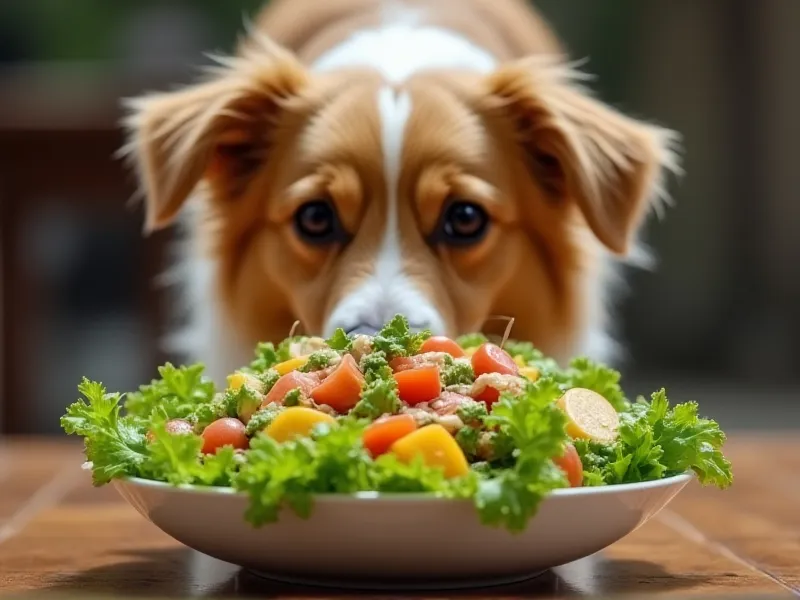
Table of Contents
- So, Can Dogs Eat Caesar Salad? The Short Answer
- The (Few) Potential Benefits of Caesar Salad for Dogs
- The Risks: Why Most Caesar Salad Ingredients Are Dangerous
- Garlic & Onions: Hidden Toxins
- High Fat & Sodium: A Recipe for Pancreatitis
- Croutons: Empty Calories & Choking Hazards
- Parmesan Cheese: Fat, Salt, & Lactose Issues
- How Much Caesar Salad Is “Safe” for Dogs? (If Any)
- Healthier Alternatives to Caesar Salad for Dogs
- FAQ: Your Top Caesar Salad Questions Answered
- Conclusion: Prioritize Safety Over Sharing
1. So, Can Dogs Eat Caesar Salad? The Short Answer
Let’s cut to the chase: Technically, dogs can eat small amounts of plain, unseasoned romaine lettuce (the base of Caesar salad), but the rest of the salad is either dangerous or unhealthy for them.
Caesar salad isn’t inherently toxic, but its key ingredients—dressing, croutons, cheese, and even hidden seasonings—pose significant risks. Think of it like this: The “good” part (lettuce) is minimal, while the “bad” parts (dressing, croutons, etc.) are loaded with toxins, fat, and salt. For most dogs, the risks far outweigh any potential benefits.
2. The (Few) Potential Benefits of Caesar Salad for Dogs
Before we dive into the risks, let’s acknowledge the one redeeming component: romaine lettuce. If you strip away all the extras, romaine is a low-calorie, nutrient-rich veggie that can offer some perks for dogs—in moderation.
Key Nutrients in Romaine Lettuce for Dogs:
- Fiber: Supports healthy digestion by adding bulk to stool and promoting regular bowel movements.
- Vitamin A: Essential for eye health, immune function, and skin/coat health.
- Vitamin C: An antioxidant that boosts the immune system and helps fight inflammation.
- Vitamin K: Important for blood clotting and bone health.
- Potassium: A mineral that supports heart function, muscle health, and fluid balance.
For example, a small handful of chopped romaine (without any dressing or toppings) might act as a low-calorie snack for a medium or large dog, offering a tiny nutrient boost. But here’s the catch: These benefits are minimal, and there are far safer, more nutrient-dense veggies dogs can eat (we’ll cover those later!).
3. The Risks: Why Most Caesar Salad Ingredients Are Dangerous
Now, let’s get real: Caesar salad isn’t just lettuce. It’s a mix of ingredients that, for dogs, can range from “unhealthy” to “life-threatening.” Let’s break down the biggest risks:
Garlic & Onions: The Hidden Toxins
Caesar dressing is the biggest culprit here. Most store-bought or restaurant Caesar dressings contain garlic (and sometimes onions), both of which are toxic to dogs.
Garlic and onions belong to the Allium family, which contains thiosulphate—a compound that damages red blood cells in dogs, leading to a condition called hemolytic anemia. Symptoms include weakness, lethargy, pale gums, rapid breathing, and dark urine. Even small amounts of garlic can be harmful over time, and larger doses can be fatal.
Fun fact (but not fun): Garlic is actually more toxic to dogs than onions, pound for pound. So even a spoonful of Caesar dressing with garlic is risky.
High Fat Content: A Pancreatitis Risk
Caesar dressing is also loaded with fat, often from mayo, olive oil, or anchovies (yes, anchovies!). Dogs’ bodies aren’t designed to handle large amounts of fat, and a high-fat meal can trigger pancreatitis—a painful, potentially life-threatening inflammation of the pancreas.
Pancreatitis symptoms include vomiting, diarrhea, abdominal pain, loss of appetite, and lethargy. In severe cases, it can lead to organ failure. Even a small drizzle of dressing could be enough to upset a dog’s system, especially if they’re small, overweight, or have a history of pancreatitis.
Excess Sodium: Bad for the Heart & Kidneys
Between the dressing, Parmesan cheese, and even the croutons, Caesar salad is salty. Dogs need sodium to function, but too much can cause sodium ion poisoning, leading to symptoms like excessive thirst, urination, vomiting, diarrhea, tremors, or even seizures. Over time, high sodium intake can also strain the kidneys and heart.
Croutons: Empty Calories & Choking Hazards
Croutons are little more than toasted bread—high in carbs, low in nutrients, and often loaded with salt. For dogs, they’re:
- Empty calories: Contributing to weight gain or obesity (a leading cause of joint pain, diabetes, and other issues in dogs).
- Choking hazards: Hard, dry, and irregularly shaped, croutons can get stuck in a dog’s throat, especially for small breeds.
- Potential for digestive upset: The high carb content can throw off a dog’s blood sugar or cause gas/bloating.
Parmesan Cheese: Fat, Salt, & Lactose
That sprinkle of Parmesan on top? It might seem harmless, but it’s high in fat and salt (see above risks). Plus, many dogs are lactose intolerant—their bodies lack the enzyme (lactase) needed to digest milk sugars, leading to diarrhea, gas, or stomach cramps. Even small amounts can upset sensitive tummies.
4. How Much Caesar Salad Is “Safe” for Dogs? (If Any)
If you’re determined to share a tiny bite with your pup (we get it—those puppy eyes are persuasive!), here’s the only “safe” way:
- Stick to plain romaine lettuce only: No dressing, no croutons, no cheese, no anchovies. Just a single, bite-sized piece of washed romaine.
- Keep it tiny: For a small dog (e.g., Chihuahua), that’s a piece the size of your thumbnail. For a large dog (e.g., Labrador), maybe a piece the size of a quarter.
- Rarely: This should be a one-time “treat,” not a regular snack. Dogs thrive on balanced, species-appropriate diets—lettuce isn’t a substitute for their kibble or wet food.
When in doubt: Don’t share. The risks of accidental exposure to garlic, fat, or salt are too high, even if you “pick off” the toppings. Most Caesar salads are mixed, so dressing or crumbs might still cling to the lettuce.
5. Healthier Alternatives to Caesar Salad for Dogs
Instead of risking Caesar salad, opt for these dog-safe, nutrient-packed veggies—they’re far more beneficial and way less likely to cause harm:
- Carrots: Crunchy, low-calorie, and rich in beta-carotene (vitamin A) for eye health. Great for teething puppies!
- Cucumber: Hydrating, low in calories, and packed with vitamins K and C. A perfect summer snack.
- Green beans: High in fiber and vitamins, and low in calories—excellent for weight management.
- Sweet potato: Cooked, plain sweet potato is a great source of fiber, vitamins A and C, and antioxidants.
- Bell peppers: Crunchy and full of vitamin C (red peppers have the most!). Remove seeds first to avoid choking.
These veggies are easy to prepare (wash, chop, and serve raw or lightly steamed) and offer more nutrients than romaine lettuce. Plus, they’re less likely to be contaminated with hidden toxins like garlic or excess salt.
6. FAQ: Your Top Caesar Salad Questions Answered
Q: My dog ate a bite of my Caesar salad—should I panic?
A: It depends on what they ate. If it was just a tiny piece of lettuce, they’ll probably be fine. If they ate dressing, croutons, or cheese, monitor them closely for 24 hours. Watch for vomiting, diarrhea, lethargy, or loss of appetite. If you notice any of these, contact your vet immediately—especially if garlic was involved.
Q: Can dogs have Caesar salad without dressing?
A: Maybe, but only if it’s just plain romaine (no croutons, cheese, or anchovies). Even then, the benefits are minimal, and there are better snack options. Always check the salad for hidden ingredients first!
Q: Is romaine lettuce safe for dogs?
A: Yes, in small, occasional amounts. It’s low in calories and has some fiber and vitamins. Just avoid iceberg lettuce, which is mostly water and lacks nutrients.
Q: What if my dog loves Caesar salad—can I make a “dog-safe” version?
A: You could try making a plain romaine salad with a tiny drizzle of olive oil (no garlic/onions), but even that is unnecessary. Dogs don’t need salad! Stick to their regular diet and safe veggies instead.
Q: Are other salad dressings safer than Caesar?
A: Most salad dressings are risky for dogs. Ranch has garlic/onion powder, vinaigrettes are high in vinegar (which can upset tummies), and creamy dressings are high in fat. It’s best to avoid all dressings.
7. Conclusion: Prioritize Safety Over Sharing
At the end of the day, Caesar salad is a human food—not a dog food. While a tiny piece of plain romaine lettuce is unlikely to harm your pup, the rest of the salad (dressing, croutons, cheese) poses real risks, from garlic toxicity to pancreatitis.
When it comes to sharing food with your dog, “better safe than sorry” is the golden rule. Opt for dog-safe veggies like carrots or cucumber instead, and always check with your vet before introducing new foods—especially if your dog has health issues like diabetes, pancreatitis, or allergies.
Your dog might give you those sad eyes when you’re eating salad, but they’ll thank you (with tail wags!) for keeping them healthy and safe.
Sources:
- American Society for the Prevention of Cruelty to Animals (ASPCA). “Toxic and Non-Toxic Plants: Garlic.” aspca.org
- VCA Animal Hospitals. “Pancreatitis in Dogs.” vcahospitals.com
- PetMD. “Can Dogs Eat Lettuce?” petmd.com
- American Kennel Club (AKC). “Human Foods Dogs Can and Can’t Eat.” akc.org